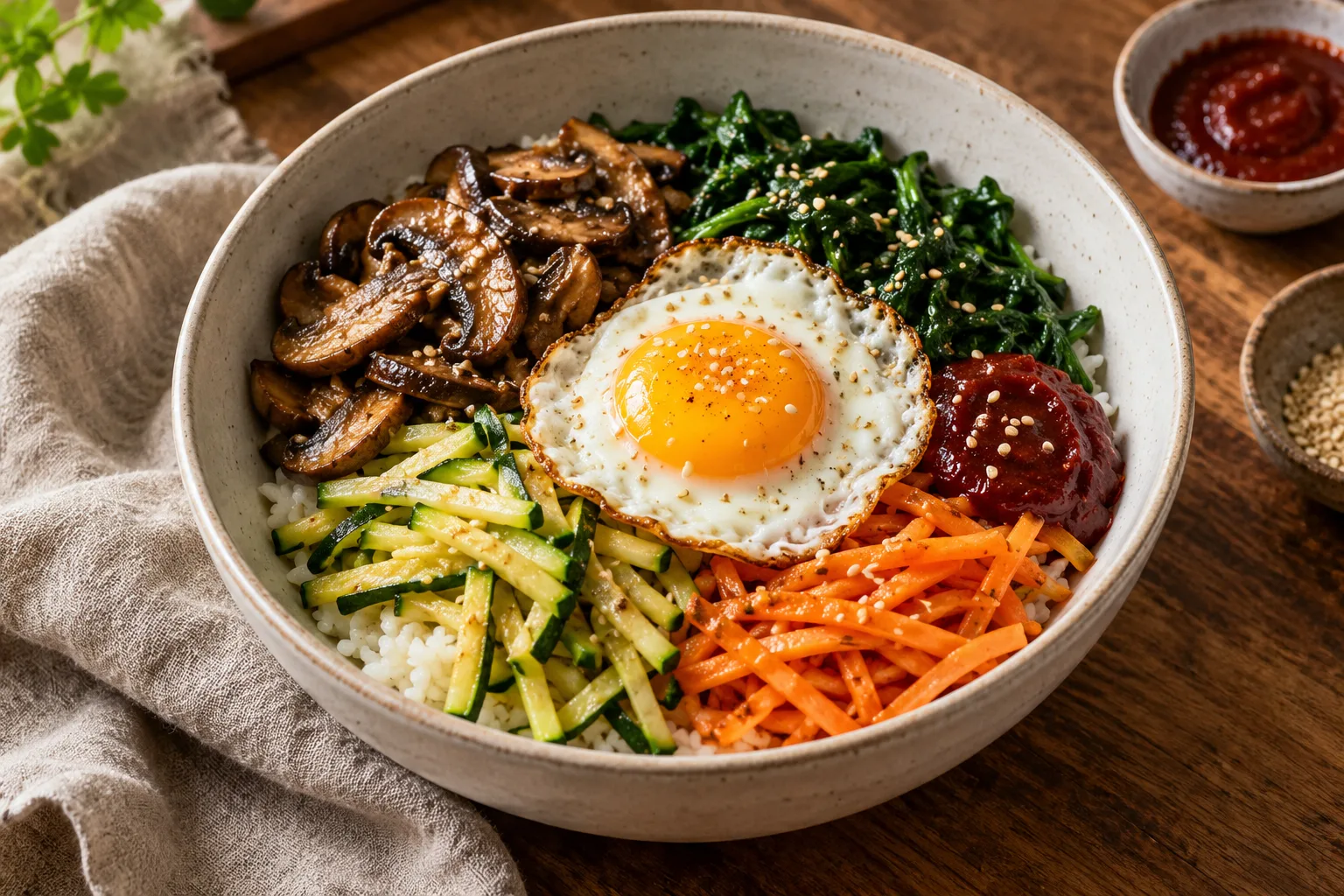
Korean bibimbap brings rice and a variety of ingredients together, ready to be mixed before eating. VisitKorea highlights this combination of colours and flavours. Here cultivated mushrooms replace meat while the egg remains: this version is vegetarian, not vegan. Cooking the vegetables separately preserves their colour and makes the final bowl easy to arrange.
Read in: English
Food · International
Vegetarian bibimbap: mix the colours at the table
Rice, mushrooms, spinach, carrots and courgettes with egg and gochujang in a bowl inspired by the Korean classic.
2026-10-27 · Editorial staff · Estimated reading time: 2 min
Queen of Queens · Food
The recipe
Korea
- Servings
- 4
- Preparation
- 20 min
- Cooking
- 25 min
- Rest / waiting
- 0 min
- Total time
- 45 min
- Estimated calories per serving
- 480 kcal
Difficulty: Medium
Ingredients and quantities
- 280 g dry white rice
- 300 g cultivated mushrooms
- 200 g spinach
- 200 g carrots and 200 g courgettes
- 4 eggs
- 25 g sesame oil, preferably half untoasted for cooking
- 10 g sesame seeds
- 40 g gochujang
- 20 ml soy sauce
- 1 tbsp rice vinegar; water as directed on the rice pack
Method
- Cook the rice according to its packet. Meanwhile slice the mushrooms and cut carrots and courgettes into matchsticks.
- Use a total of 15 g oil to sauté mushrooms for 6–8 minutes, then carrots and courgettes separately for 3–4 minutes each. Divide half the soy sauce among them.
- Blanch spinach for 1–2 minutes, drain and squeeze. Dress with 5 g oil and the remaining soy sauce. Mix gochujang with vinegar and a tablespoon of water.
- Fry the four eggs in the final 5 g oil until both whites and yolks are set.
- Divide rice among bowls, arrange vegetables in sections and add the eggs. Finish with sesame and sauce to taste; mix before eating.
Tips and variations
Gochujang and soy sauce vary in saltiness: taste before adding salt. For a vegan version replace the egg with tofu and recalculate the calories.
Allergens
Eggs, sesame, soy and often wheat/gluten; check gochujang and soy sauce labels.
Sources and further reading
- Korea Tourism Organization — Bibimbap
- https://english.visitkorea.or.kr/svc/contents/contentsView.do?menuSn=181&vcontsId=178062
Calories are estimates per serving and vary with ingredients, brands and actual quantities. Times are approximate; the total includes the stated resting time.