Career and Corporate Transformation
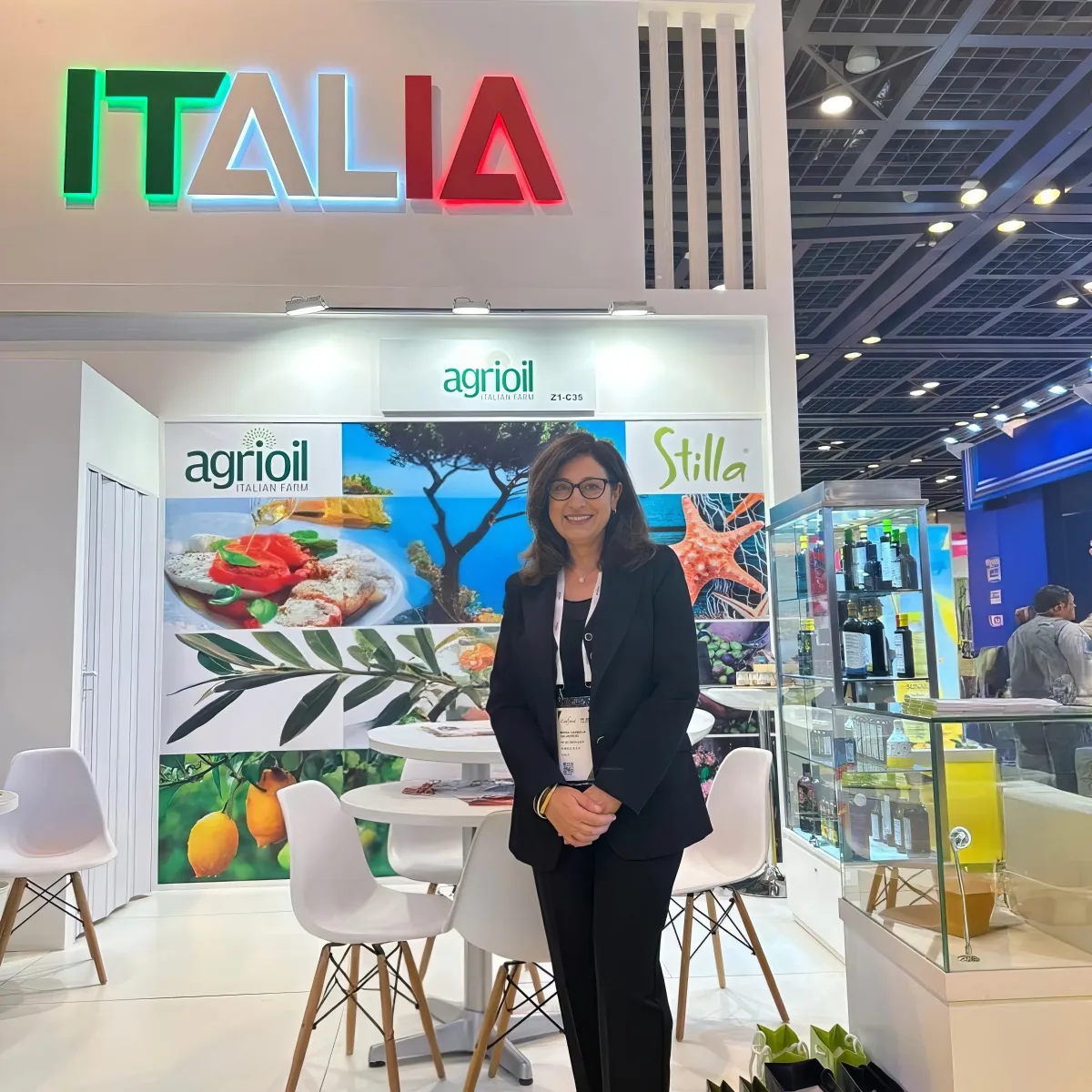
Dr. Calabrese, you have been a key figure at Agrioil S.p.A. since 2002, holding the role of HR and BD Manager. Can you tell us about your journey and how your vision has transformed the workplace into an environment where everyone can express their human and professional potential? How do you give new life and organization to a complex corporate reality?
From 2002 to today, my journey has been a continuous evolution parallel to that of the company itself. Entering the mechanisms of a complex production reality immediately clarified a fundamental truth for me: the excellence of a product — even the most extraordinary extra virgin olive oil — stems first and foremost from the excellence of the human relations that generate it. By combining my background in psychology with human resources management and business development, I tried to overturn the traditional paradigm: putting the person at the center is not an abstract concept, but a concrete organizational strategy.
Giving new life to a complex structure means moving from authority to listening, structuring clear and meritocratic processes, and creating a climate of integrated trust where mistakes are not penalized but processed as opportunities for growth. When people feel seen, valued, and safe in their work context, their potential is naturally unlocked and expressed at the highest levels, transforming operational complexity into cohesion and performance.
The Olive Oil Market in Italy and Worldwide
Agrioil, founded in 1989, today has 74 members between olive growers and mills, specialized in the production of quality extra virgin olive oil. What is your vision of the current state of the olive oil market on an Italian and global level? What are the most complex commercial challenges that "Made in Italy" faces today on international markets?
The global olive oil market is undergoing a phase of profound redefinition. On one hand, there is growing consumer awareness regarding health, traceability, and the important value of the Mediterranean diet; on the other, we are witnessing strong production fluctuations due to climate change and geopolitical tensions.
For "Made in Italy", the main challenge on international markets is to overcome the price trap. Too often, olive oil is trivialized as a generic shelf commodity. Our task and the most complex challenge is to build product culture. We must educate domestic and foreign markets to understand that behind an excellent Italian bottle there is not just a condiment, but a heritage of cultivar biodiversity, landscape, health, and strict control regulations that govern the raw material. The strength of a group like Agrioil, with its 74 members, lies precisely in its ability to create critical mass by guaranteeing a short supply chain, authenticity, and volumes adequate for domestic needs and exports, without ever compromising on quality.
The Impact of Xylella
Xylella has represented a mortal danger for olive growing in the South. Has Agrioil, which has its operational headquarters in Roccadaspide in Campania, suffered direct damage or repercussions on its supply network due to this epidemic? How did you defend yourselves against this threat?
The phenomenon of Xylella in Puglia has been an open wound for all national and Mediterranean olive growing, as well as a dramatic warning about the vulnerability of our ecosystems. Despite having our operational headquarters in the heart of Cilento, in Roccadaspide, well away from the phenomenon, we never felt "immune" or as external spectators.
The territory has defended itself through a dual strategy: strict prevention and the enhancement of local biodiversity. It has strengthened monitoring and phytosanitary control protocols throughout our entire supply network. Furthermore, the richness of the olive-growing heritage in Campania and Cilento (featuring extraordinary native cultivars such as Nostrale, Rotondella, Pisciottana, and Carpellese) has proven to be a natural shield. Our response to these emergencies lies in the protection of biodiversity, good agronomic practices, and close scientific collaboration with agronomists and local institutions to monitor the olive groves of our district.
Corporate Welfare and Psychological Well-being
One of your most interesting initiatives is the attention to 360° well-being. For about five years, you have introduced professional figures dedicated to counseling and psychological/psycho-pedagogical support, guaranteeing a "One-to-One" listening space for collaborators. How did this avant-garde idea for the agricultural sector come about and what impact has it had on the corporate climate?
The idea was born from my dual identity: a manager with a master's degree in work and organizational psychology. In the agri-food and industrial sector, traditionally linked to concrete and sometimes rigid production rhythms, talking about psychological well-being might have seemed like a heresy or a luxury. I have always believed the exact opposite: the mental and emotional health of workers is the primary factor of corporate sustainability.
Introducing the One-to-One listening desk and counseling paths in the company has allowed us to create an oasis of decompression, where people can face stress, fragility, or work-life balance difficulties in total confidentiality. The impact on the corporate climate has been extraordinary: we recorded a drastic reduction in turnover, a lowering of internal conflicts, and, above all, an increase in the sense of belonging. People know that Agrioil doesn't just ask them for "arms and skills," but cares for them as human beings.
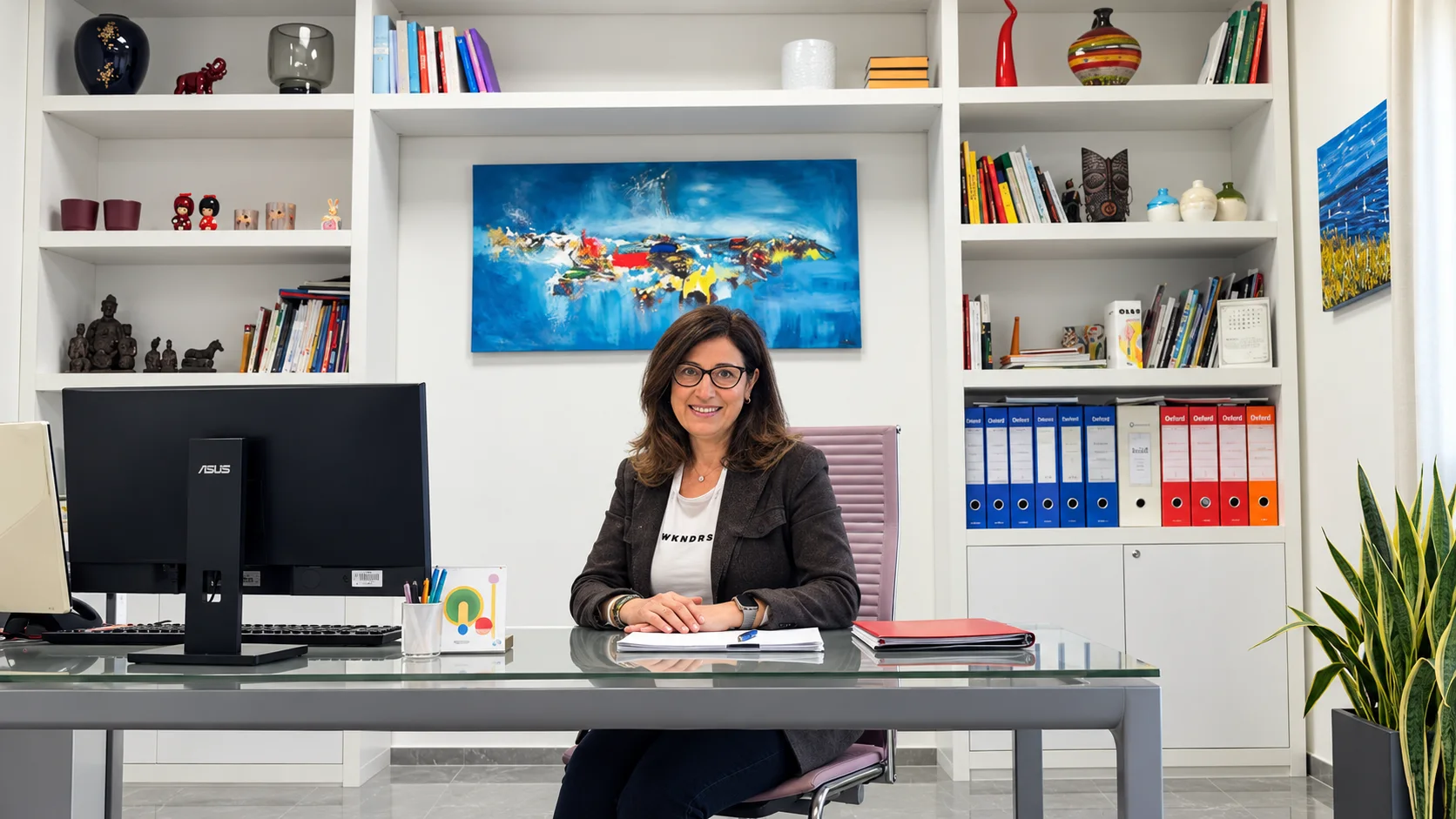
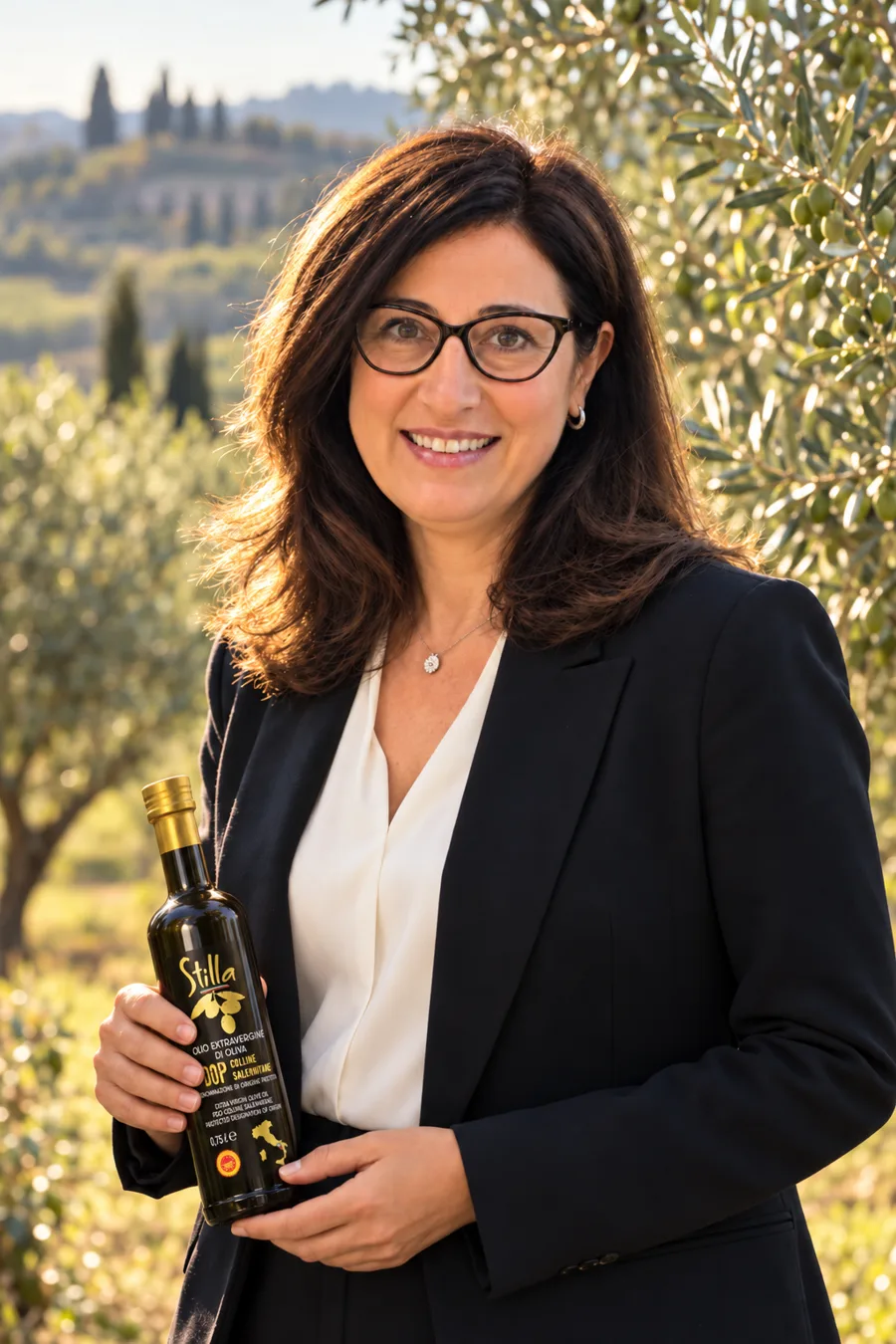 Credit: Courtesy of Agrioil Archive / Photo of Dr. Maria Carmela Calabrese
Sustainability and Benefit Corporation
We know that you recently participated in the sustainability assessment promoted by ESG Makers Food 2026 and that Agrioil has embarked on the path to becoming a Benefit Corporation. How are you integrating sustainability as a strategic lever to generate shared value?
For us, sustainability is not a marketing label or a passing fad, but a moral responsibility and a precise industrial choice. Participating in the ESG Makers Food 2026 assessment provided us with a clear and rigorous snapshot of our strengths and areas for improvement.
The transition towards the Benefit Corporation model represents the natural formalization of what Agrioil has always done: integrating into its bylaws, alongside profit objectives, the goal of having a positive impact on society and the environment. This translates into the energy efficiency of the milling plants, the recovery and reuse of processing by-products (such as pomace and pits), the reduction of our carbon footprint, but also active support for the social fabric of Cilento, sustaining the local agricultural supply chain and offering dignified and protected work.
Editorial Commitment, Politics, and Female Leadership
In addition to your entrepreneurial career, you also collaborate in the editorial sector for various figures involved in politics. How do you balance this commitment with your managerial role at Agrioil? What advice would you give to young women who want to establish themselves in managerial roles?
Balancing managerial activities with political and editorial commitments requires a high level of discipline, the ability to delegate, and, above all, a strong civic passion. For me, being active in collaborating to draft publications is the natural continuation of the social and economic commitment I exercise every day in the company: it means putting listening, organization, and the search for concrete solutions at the service of the community and equal opportunities.
To young women who wish to establish themselves in the agri-food sector or in managerial roles, I say: study, be rigorous, and don't be afraid to bring your unique vision into organizations. The agricultural sector has long been male-dominated, but women possess a natural aptitude for systemic vision, empathy, and complexity management, which is indispensable for modern leadership today. You do not have to conform to male models to be successful: your strength lies precisely in the determination and authenticity of your innate and knowledge-acquired skills.
Vision for the Future
Agrioil looks to the future by committing to giving space to young people and embracing technological innovation. What are the next goals you have set for your production and for the evolution of the brand?
Our gaze is firmly focused on the future. The next milestones mainly concern two directions: integrated technological innovation and generational turnover. We are investing in technological innovation and Artificial Intelligence-based solutions applied to the optimization of the supply chain and the quality of industrial transformation processes, to make our production increasingly efficient and with a low environmental impact.
At the same time, we want Agrioil to be a magnet for young talents in Southern Italy. We want to prove that staying or returning to work in the South is not a fallback choice, but an exciting challenge. Agrioil will evolve by strengthening its identity as an ambassador of high Italian quality in the world, combining millennia-old tradition with digital modernity.
The Challenge of Extra-EU Competition and Mega-Plantations
Recently, we have been witnessing immense pressure from extra-European competition. Countries like Tunisia and Morocco are expanding their cultivations enormously, with super-intensive plantations in the desert financed internationally. How can the entire 'Made in Italy' extra virgin olive oil sector defend its identity and make the consumer perceive the true added value of our quality?
The challenge cannot be won on the grounds of price or quantity, but on identity, absolute quality, and the value of the territory. The large overseas super-intensive plants focus on huge volumes and a limited number of homologated cultivars for industrial production; Italy, on the contrary, holds a biodiversity rich in native plant varieties unique in the world, and a tradition that no desert technology can replicate.
To defend and convey the true value of Made in Italy, our strategy – both as Agrioil and as a sector – is based on two fundamental pillars:
- Protection of Identity and Typicality (PDO and PGI Trademarks): Certified origin marks are not simple labels, but a true guarantee of traceability, history, and an indissoluble bond with the territory. The typicality of our local cultivar varieties offers distinctive organoleptic and nutritional profiles of high value that mass productions can never equal.
- Absolute Quality and Transparency: Explaining to the consumer that an excellent extra virgin olive oil is not a simple condiment, but a functional food extremely rich in polyphenols and antioxidants, the result of rigorous controls and obsessive attention at every stage of the supply chain, from the mill to the bottle.
In short, unlike the model based on the homologation of a few varieties, the excellence of superior Italian quality responds by enhancing uniqueness, sustainability, and the culture of know-how. Our task is to continue educating the consumer, so that they choose not simply "an oil", but an unbeatable heritage of health, landscape, and quality.
© 2026 Queen of Queens Magazine. All rights reserved. Original interview conducted and curated by the editorial team. Reproduction prohibited.