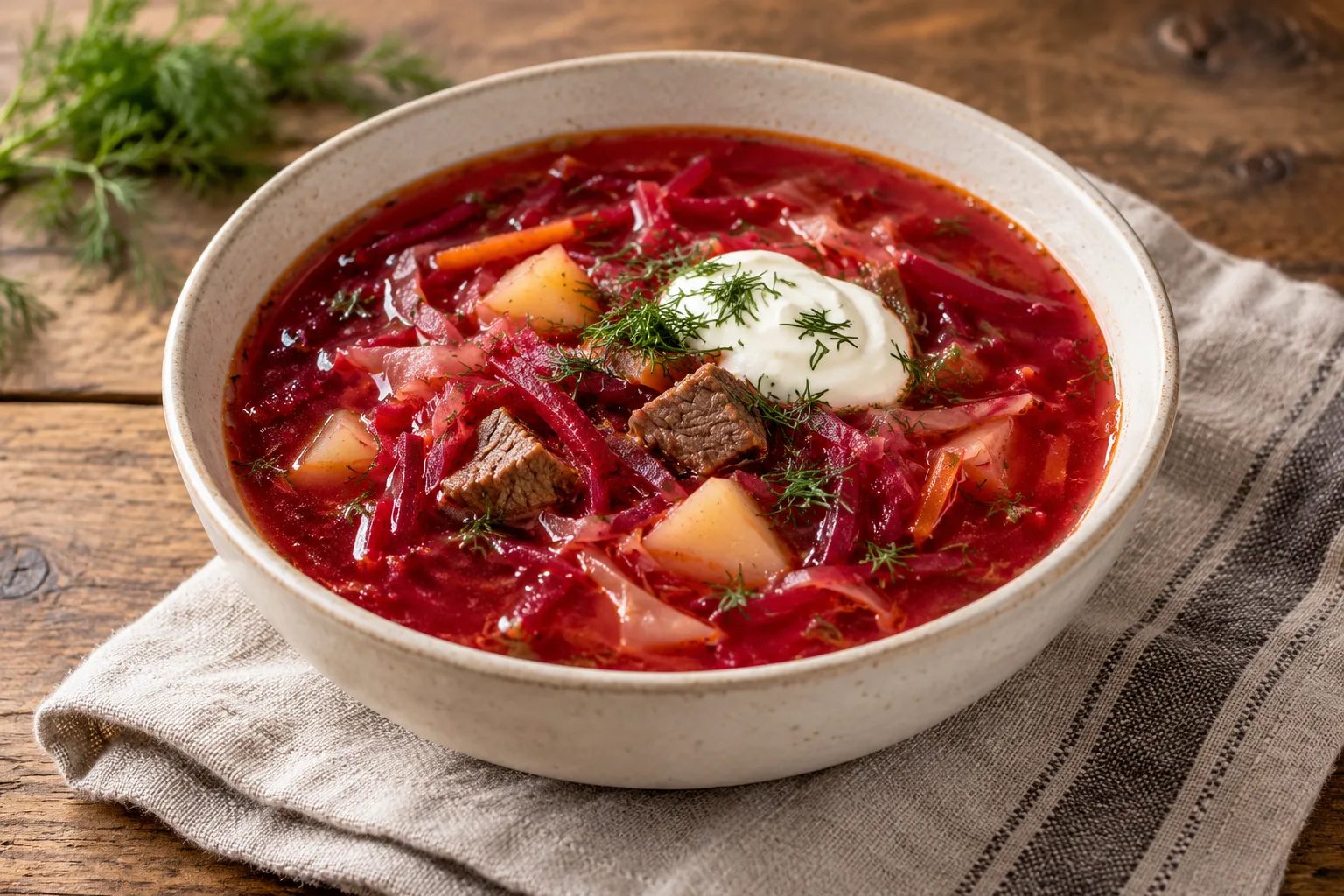
Ruby-red broth, vegetables and tender beef, finished with dill and sour cream: a slow-cooked Ukrainian soup for six to share.
Read in: English
Food · International
Ukrainian borshch: a homely beetroot, cabbage and beef soup
Ruby-red broth, vegetables and tender beef, finished with dill and sour cream: a slow-cooked Ukrainian soup for six to share.
2026-10-28 · Queen of Queens Admin · Estimated reading time: 4 min
Queen of Queens · Food
The recipe
Ukraine
- Servings
- 6
- Preparation
- 25 min
- Cooking
- 130 min
- Rest / waiting
- 15 min
- Total time
- 170 min
- Estimated calories per serving
- 280 kcal
Difficulty: Medium
Ingredients and quantities
- 500 g lean boneless stewing beef, cut into approximately 2 cm cubes
- 400 g raw beetroot, trimmed and peeled weight
- 350 g potatoes, peeled weight
- 300 g white cabbage, core removed
- 150 g carrots, trimmed weight
- 150 g onion, peeled weight
- 200 g tomato passata
- 30 g tomato purée (concentrated tomato paste)
- 20 g sunflower oil
- 2 garlic cloves, about 10 g
- 20 ml apple cider vinegar
- 2 bay leaves
- 10 g fresh dill
- 2 litres water, plus a little hot water if needed
- 90 ml sour cream, 15 ml per serving
- Salt and black pepper, to taste
Method
- Cut the beetroot and carrots into thin matchsticks, slice the onion and cabbage, and cut the potatoes into approximately 2 cm cubes. Keep the vegetables separate.
- Put the beef in a large pot with 2 litres of water and the bay leaves. Bring gently to the boil, skim off any foam, then reduce the heat. Simmer with the lid slightly ajar for about 90 minutes, until the meat starts to become tender. Extend this cooking time if necessary before adding the potatoes.
- While the beef cooks, heat the oil in a wide frying pan. Soften the onion and carrots for 8–10 minutes, stirring. Add the beetroot and cook for another 5 minutes. Stir in the tomato purée for one minute, then add the passata, vinegar and about 150 ml of broth from the beef pot. Cover and cook gently for 20–25 minutes, until the beetroot is almost tender.
- When the meat is tender, add the potatoes to the broth and simmer for about 15 minutes: they should be almost cooked before the acidic tomato and beetroot mixture goes in. Add the cabbage and cook for a further 8–10 minutes.
- Tip all the vegetables and juices from the frying pan into the pot. Add the chopped garlic and a little hot water only if the soup is too thick. Simmer for another 5 minutes, check that the beef and potatoes are tender, and season with salt and pepper.
- Turn off the heat, remove the bay leaves and stir in half the chopped dill. Cover and rest for 15 minutes. Divide between six bowls and finish each with 15 ml sour cream and the remaining dill.
Story and origins
Ukrainian borshch has many family and regional versions, linked to hospitality and knowledge passed between generations. In 2022, UNESCO inscribed the culture of its preparation on the List of Intangible Cultural Heritage in Need of Urgent Safeguarding. The recognition concerns that culture, rather than a single recipe. A preparation published by Olha Franko in 1929 also included beans and dried mushrooms. This version uses beef, beetroot and cabbage, with apple cider vinegar providing a tangy note.
Tips and variations
Use raw beetroot: pre-cooked beetroot needs different cooking times. Choose beef suitable for slow cooking; tenderness depends on the cut and cube size. The stated cooking time includes making the broth, while the frying-pan vegetables cook alongside it. Allow about 2 hours 50 minutes in total, including a 15-minute rest, and longer if the beef needs it. Add the sour cream when serving. Estimated energy is about 280 kcal per serving, including oil and sour cream; this varies particularly with the fat content of the beef and the cream used. Any bread served alongside is excluded.
Allergens
Milk, in the sour cream. Check the vinegar label for any declared sulphites. Bread served separately may contain gluten.
Sources and further reading
- UNESCO — Culture of Ukrainian borscht cooking
- https://ich.unesco.org/en/USL/culture-of-ukrainian-borscht-cooking-01852
- Olha Franko’s Kitchen — Ukrainian Borscht, ricetta del 1929 / 1929 recipe
- https://www.olhafrankoskitchen.com/recipes/ukrainian-borscht/
Calories are estimates per serving and vary with ingredients, brands and actual quantities. Times are approximate; the total includes the stated resting time.