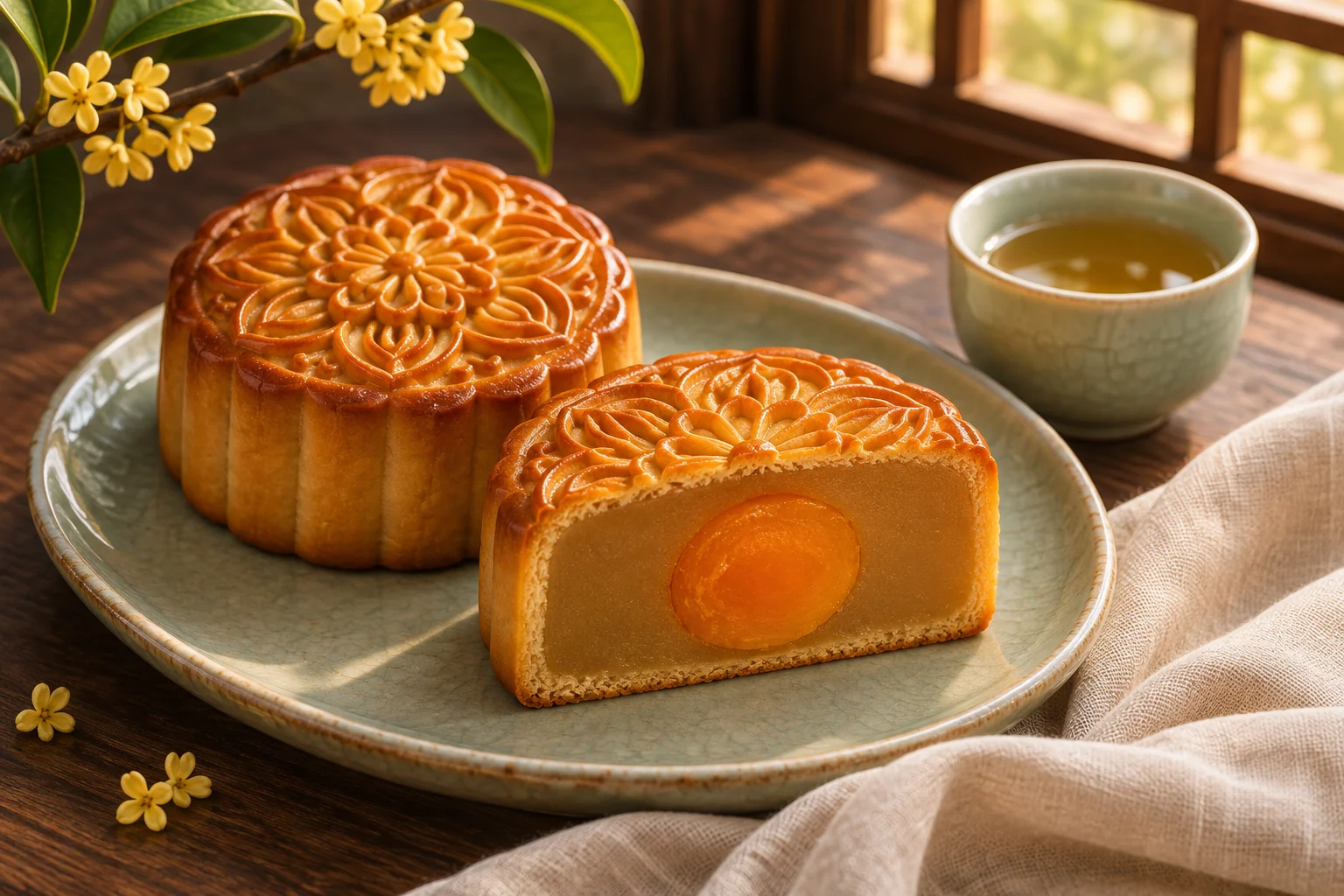
A golden surface, a pattern pressed into pastry, a dense filling revealed by the first cut: mooncakes, or yuebing, belong to the Mid-Autumn Festival. They are given as gifts and shared, often in small wedges alongside tea. Their round shape evokes the moon and family reunion. But mooncakes and the foods of the Dragon Boat Festival belong to two different celebrations.
One celebration, many styles of pastry
Mid-Autumn falls on the fifteenth day of the eighth month of the traditional Chinese calendar. In 2026, that date was 25 September. The Cantonese mooncake, with its thin, glossy crust, is among the most recognisable styles. Fillings include lotus seed paste, sweet red bean paste, nuts and, in some versions, salted egg yolk. Yet there are also flaky pastries, including Suzhou-style mooncakes, and soft snow-skin mooncakes, served chilled. They do not all share the same dough or cooking method.
How a baked mooncake begins
To understand the process, let us follow the Cantonese style. The dough combines flour, golden or invert syrup and oil; some recipes include a small amount of food-grade alkaline solution, which contributes to colour and texture. This is a culinary ingredient to use in the quantity specified by the chosen recipe. After resting, the dough should be supple enough to enclose the filling without tearing.
The filling is made separately. Red beans are cooked, puréed and worked with sugar and fat into a thick paste, then cooled. Lotus seed paste must also hold its shape. A loose cream would make the pastry difficult to seal and the pattern harder to preserve during baking.
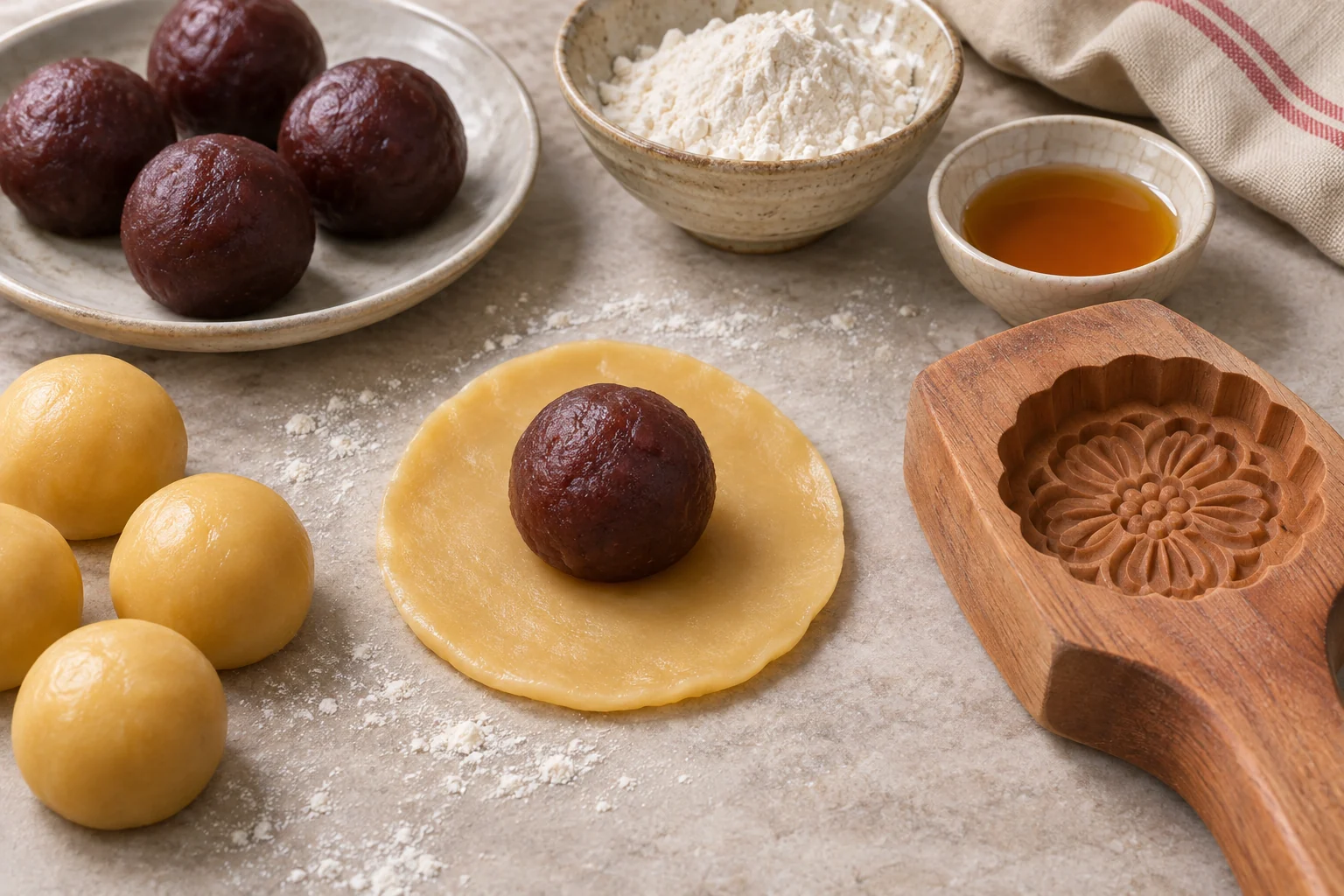
Dough and filling are portioned separately before the mooncakes are shaped.
Wrap, press and bake
Small portions of dough and filling are weighed to fit the chosen mould. The wrapper is flattened, a ball of filling placed in the middle, and the dough eased gently upwards until the seam closes. This step deserves as much care as the decoration: even thickness and a complete seal help prevent cracks.
The filled ball then goes into a lightly floured mould, traditionally wooden or a modern press. The relief creates floral or geometric patterns. For baked versions, a very thin egg wash adds a sheen without flooding the grooves. Temperatures, timings and the point at which the wash is applied depend on the formula and size. Follow one complete recipe, keeping its ingredient quantities and baking instructions together.
For a practical kitchen project, The Woks of Life offers classic red bean mooncakes, while King Arthur Baking publishes Clarice Lam’s version.
The rest before the tea
For many Cantonese mooncakes, the work does not end when the tray leaves the oven. The resting period specified in the recipe allows moisture and fats to redistribute, softening and evening out the surface. Storage and shelf life depend on the filling; a version containing eggs should not be treated like a plain dry biscuit. Small wedges make it possible to sample several flavours and appreciate the balance between wrapper and centre.
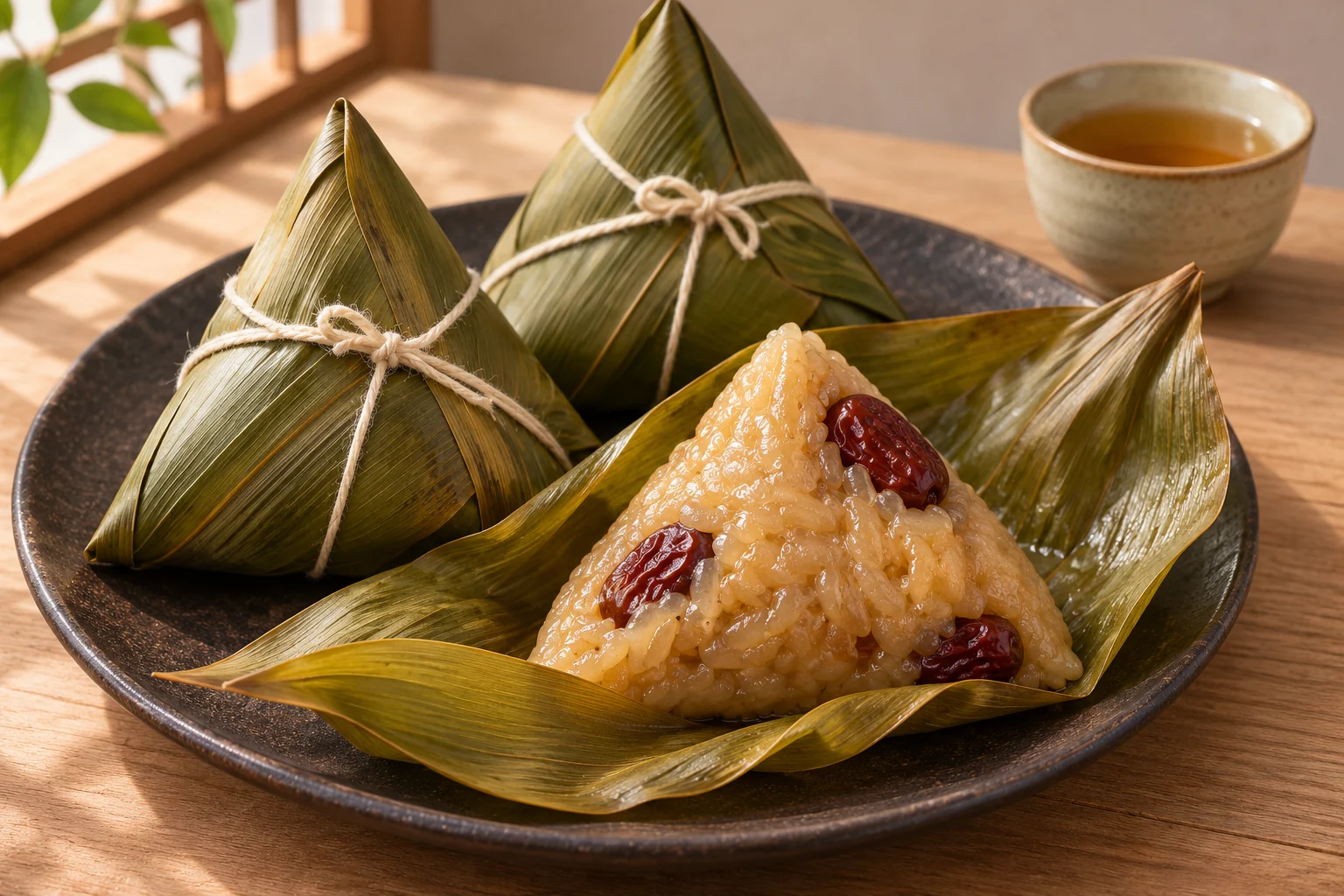
Zongzi: glutinous rice wrapped in leaves, shown here with a sweet filling.
What about the dragon festival?
The name to look for is zongzi. These are parcels of glutinous rice wrapped in leaves, often bamboo, tied and boiled or steamed according to the preparation. Fillings can be sweet, such as jujubes or bean paste, or savoury. They are not all sweets, and they do not have a mooncake’s pastry crust.
Zongzi are associated with the Dragon Boat Festival, or Duanwu, on the fifth day of the fifth traditional month: 19 June in 2026. Moon and dragon therefore do not describe two names for the same biscuit. One celebration brings patterned pastries to the table; the other wraps rice in leaves. That distinction is useful whether browsing a bakery or deciding what to make at home.
Further reading
Smithsonian Folklife Festival: four Chinese festivals · Visit Beijing: making mooncakes · Hong Kong Observatory: the 2026 calendar.