Magazine • Culture, fashion & women's empowerment

QUEEN OF QUEENS MAGAZINE

Queen’s King

Men who leave their mark.

Read in: English

The Courage to Reach Out

Credits: Lusitania, New York · Underwood & Underwood, Lest We Forget (1918), Project Gutenberg

A lifebelt on the Lusitania, an escape from slavery, a glance in the underworld. Two true stories and one myth about what it means to risk something for another person.

A hand holds a lifebelt on the deck of a sinking ship. Another reaches for Eurydice in the shadows, when the path back to daylight is almost at an end. Between these gestures lies the distance between a newspaper account and an ancient myth. A question brings them close. What happens when, at a moment when we could think only of ourselves, we realise that someone else’s fate depends on what we do?

Photographic portrait of Alfred Gwynne VanderbiltCredits: Alfred Gwynne Vanderbilt · Underwood & Underwood, Horrors and Atrocities of the Great War (1915), Project Gutenberg

Alfred Vanderbilt, a lifebelt on the Lusitania

Read the story

On 7 May 1915, a torpedo strikes the Lusitania off the coast of Ireland. Alfred Gwynne Vanderbilt, an heir to one of America’s largest fortunes, is aboard the liner. His travelling companion Thomas Slidell survived and told the New York Times that he had seen Vanderbilt put a lifebelt on a woman. Vanderbilt died in the sinking.

Slidell’s account has the precision of a scene witnessed at close range. One person needs help and another stops to give it, as every second on the ship matters. Vanderbilt was known for his fortune. That day, what he could offer a stranger came down to something he held in his hands. Thomas Slidell’s account · Smithsonian Magazine

Photographic portrait of Robert Smalls, circa 1870–1880Credits: Robert Smalls, ca. 1870–1880 · Brady–Handy Collection, Library of Congress

Hannah and Robert Smalls, winning freedom together

Read the story

On the night of 12–13 May 1862 in Charleston, Robert Smalls and fellow enslaved crew members take control of the Confederate steamer Planter. They intend to reach the Union ships and take their families with them. Hannah Jones Smalls, Robert’s wife, knows the plan. Going aboard means risking capture and leaving her eldest daughter Charlotte behind. Charlotte chooses to stay in Charleston with her newborn daughter. Hannah boards with her three other children.

By morning, they find refuge aboard the Union ship USS Onward. Many people make the escape possible. Robert and the crew take the steamer out of the harbour. Hannah makes her own choice, knowing what it might cost. For her, freedom also holds the hope of seeing the daughter she leaves ashore. After the war, Charlotte rejoins the family in Beaufort. Hannah Jones Smalls, National Park Service · Robert Smalls, National Park Service

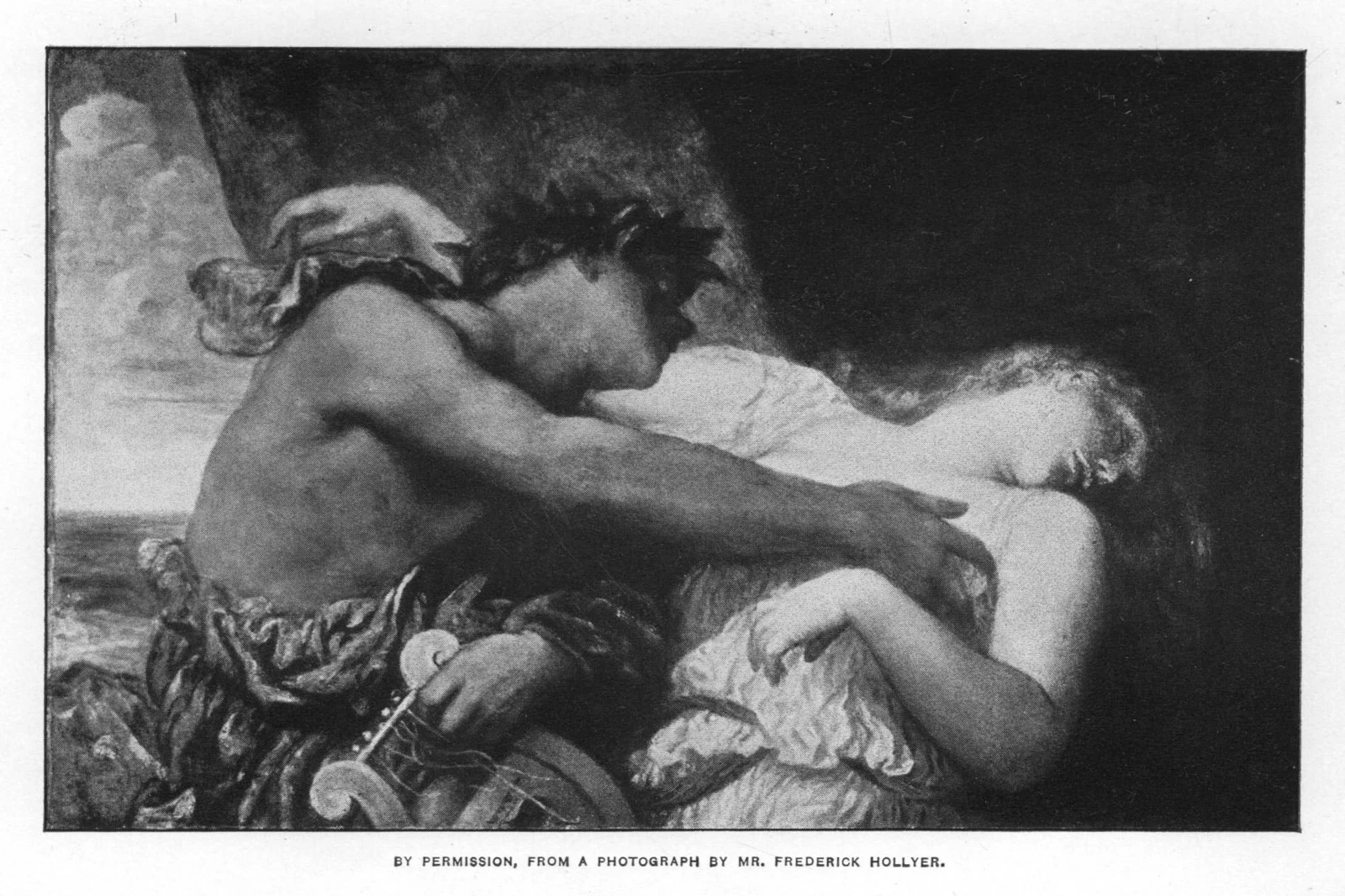
Orpheus and Eurydice in the painting by George Frederic WattsCredits: George Frederic Watts, Orpheus and Eurydice · Frederick Hollyer, in Evangelists of Art (1903), Project Gutenberg

Orpheus and Eurydice, the last few steps

Read the story

In Ovid’s Metamorphoses, Orpheus descends into the underworld to bring Eurydice back to the living. His song persuades its rulers to let her go on one condition. He must walk ahead of her without looking back until both have reached the light. At the threshold, his fear that he has lost her makes him turn. Eurydice slips back into the shadows, and Orpheus reaches for her. Her final farewell barely reaches him.

Orpheus could rely on music to win Eurydice’s release. The last few steps called for patience and trust, just when he wanted to be sure she was beside him. The myth still speaks to us in that moment of waiting. Sometimes reaching out means acting straight away. At other times it takes the strength to wait. Ovid, Metamorphoses, Book X

In the coming Kings & Legends interviews, we’ll hear from people who have faced difficult choices in their lives and work and can tell us what those decisions cost them.