A hand pauses on the rim of a bowl. It checks the thickness, adjusts a curve and decides when to stop. In tailoring, the same judgement emerges through a fitting, the fall of a fabric or a seam that needs to move with the body. These are small gestures, but they demand something a flawless image cannot convey: an encounter with the material itself.
In the age of generative artificial intelligence, a shape can appear on a screen before anyone has decided how to make it. That speed gives fresh relevance to an old question: what are we buying beyond an object’s appearance? Our reading of a new kind of luxury begins here, with the value of identifiable work and a relationship with the person who carries it out.
Beyond a perfect surface
Precision is not the enemy of emotion. A well-made joint, a carefully balanced symmetry or an even line of embroidery can be remarkable achievements of human skill. Technology does not automatically make its products anonymous, either. What matters is understanding which decisions shaped an object and which were left to a standard solution.
When so many images look alike, the desire for distinction may turn towards less immediately visible qualities: the way a cup fits the hand, a jacket hangs or a surface ages. A photograph suggests; daily use puts those suggestions to the test. From this perspective, the luxury of human skill lies in taking care of these consequences.
Imperfection needs a traceable story
A variation in glaze or a discreet chisel mark may reveal a process. Yet an irregularity alone proves neither authenticity nor quality: it might be a fault, or an effect deliberately reproduced. Good making involves knowing which traces to keep and which to correct.
To understand an object, look for concrete information: who made it, which materials they used and how it was produced. A clear explanation, documented provenance and care instructions offer more than a vague claim about a product’s “soul”. The most convincing signature is a responsibility that continues after the sale.
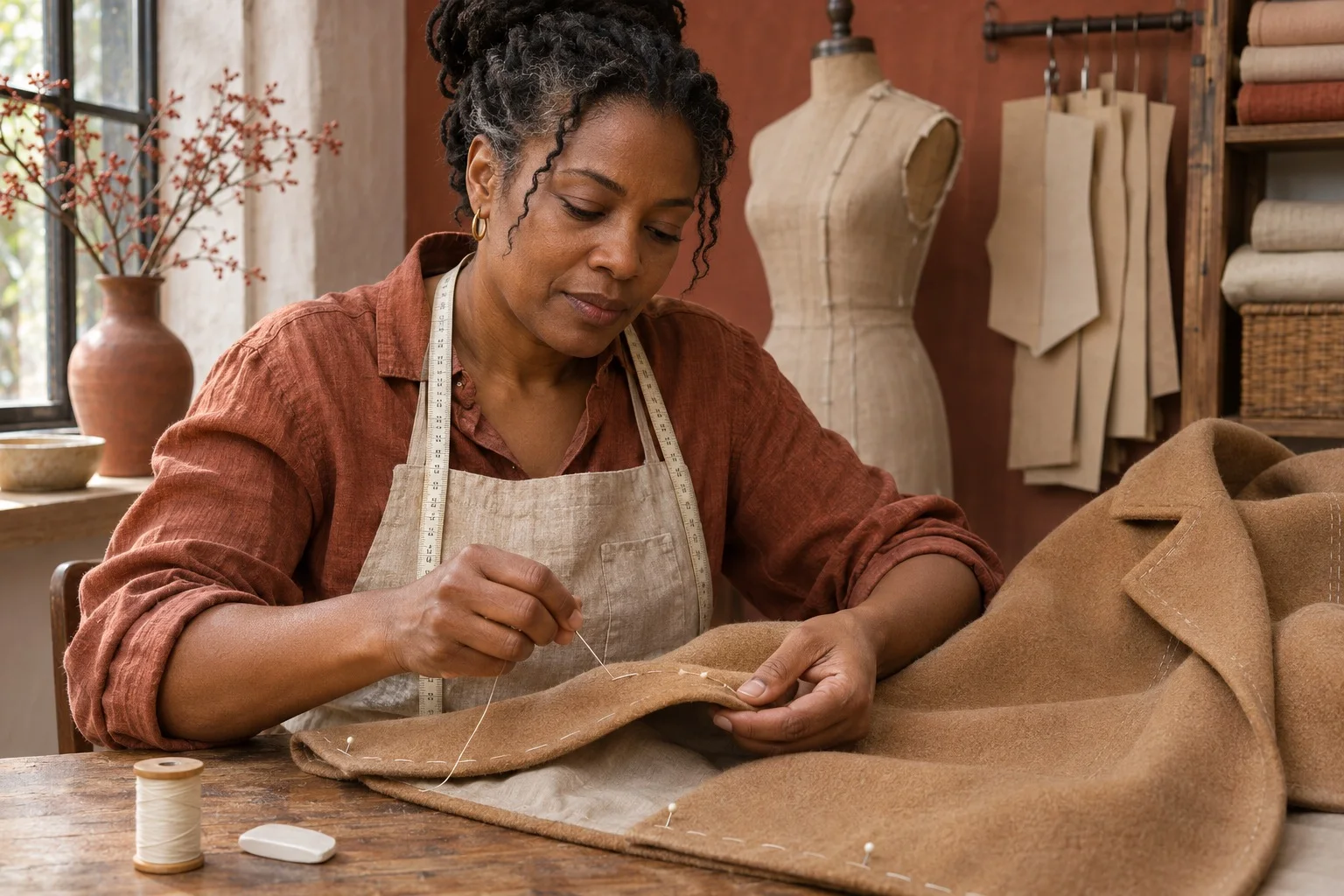
The time we see, and the time we do not
The price of a made-to-measure garment covers more than hours spent sewing. It includes developing the pattern, fittings, adjustments and the years required to recognise a problem before it becomes obvious. Even an apparently simple solution can hold a great deal of experience.
Time is not valuable merely because a process is slow. A long wait guarantees nothing. What matters is the work that makes it necessary: checking a balance, allowing a material to reach the right stage or finishing a surface. Customers should be able to understand the difference; makers should explain it without turning every delay into a romantic story.
A tradition lives when someone can learn it
UNESCO approaches traditional craftsmanship primarily as knowledge and skills to be passed on, rather than simply as a collection of objects to preserve. This changes the perspective: protecting an artefact and enabling the people who know how to make it to keep working are distinct commitments, both necessary.
A workshop remains alive when it can train new people, pay for skilled work and find a place in contemporary life. Buyers can support that continuity by asking about a technique, understanding a quotation or respecting the work involved in a repair. Transmission should not turn tradition into a postcard from the past, or knowledge into a resource for which nobody is paid.
Digital and manual tools in one workshop
Digital tools can take part in this process without erasing it. A three-dimensional model helps explore a shape; precision cutting prepares a component; simulation allows different solutions to be compared. AI adds opportunities for ideation and assistance, while materials, measurements, safety and results still require scrutiny. Value rests on decisions and process, not on whether a screen is present.
One example documented by the Victoria and Albert Museum is designer Silvia Weidenbach’s Visual Feast BOX, made in 2018, which combines 3D printing with precious materials worked and set by hand. It brings digital fabrication into conversation with jewellery-making; it should not be retrospectively presented as generative AI. It shows how productive a dialogue between different tools can be.
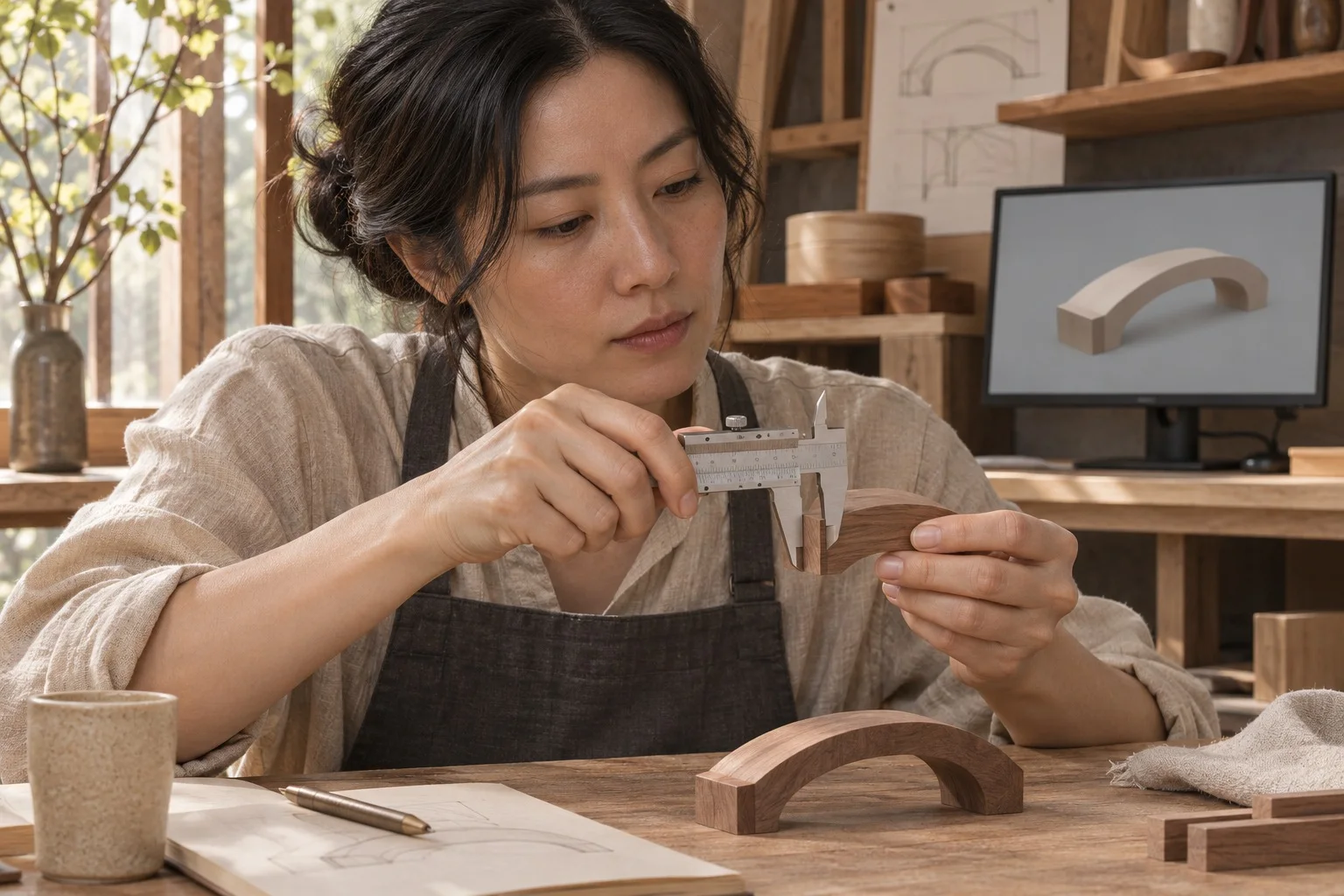
The privilege of keeping something in use
Handmade does not automatically mean sustainable. Raw materials, energy, treatments, transport and working conditions matter in small-scale production too. A more responsible choice requires intentions to be supported by things that can be checked: sound construction, accessible maintenance, replaceable components and the possibility of repair.
A bowl used every day, a coat altered over time or a restored piece of furniture can retain value through a continuing relationship. They need not be museum pieces. Perhaps the most interesting luxury, as everything accelerates, is the chance to understand what we choose, care for it and let it remain part of our lives.