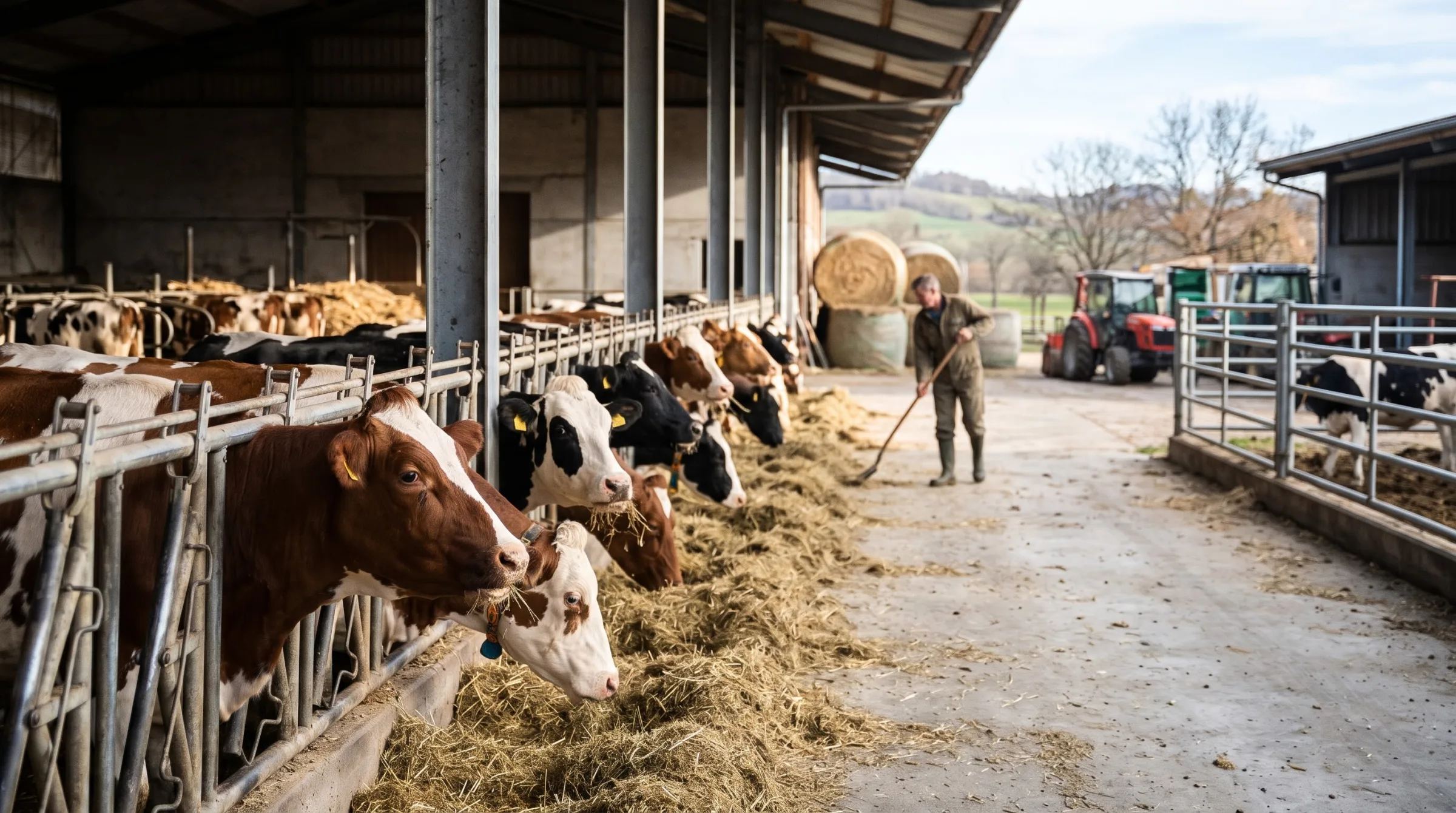
Cheese is one of the oldest and most complex foods in our culinary history. In the world of dairy extremes, surprises abound: the most expensive cheese in the world is Serbian Pule, made from Balkan donkey milk, which can exceed €1,000 per kilogram. On the olfactory front, the French Vieux Boulogne holds the title of the world's smelliest cheese, thanks to a rind washed in beer that triggers a fermentation with extreme aromas.
The Production Giants: Leading Nations and Multinationals
If we look at volumes, the global map of dairy production reveals surprising data. According to statistical reports from the USDA (United States Department of Agriculture) and the FAO, the largest cheese producer in the world is the United States, with a production that regularly exceeds 6 million metric tons annually. Europe, however, responds by dominating the podium of global exports with Germany, France, and Italy. At the corporate level, as confirmed by Rabobank's periodic rankings (Global Dairy Top 20), the absolute crown belongs to the French multinational Lactalis, recognized as the leading global player in the dairy sector.
The Global Phenomenon: The Picon Cheese Empire
When it comes to the most sold and consumed cheese in the world, one tends to think of great industrial classics like Cheddar or Mozzarella. However, there is a segment that silently dominates pantries across half the planet: portioned processed cheese. The famous Picon cheese wedges (a historic brand owned by the French giant Bel Group) represent a true global phenomenon. Verifying corporate distribution data, Bel Group products are sold in over 130 countries. The Picon brand, in particular, is an absolute icon in the Middle East and North Africa, where its ability to be stored for long periods outside the refrigerator has made it the ultimate spreadable cheese.
The Allure of the Forbidden: Sardinian Casu Marzu
If industrial cheese wedges and multinationals represent globalization, Sardinia brings us back to extreme tradition with Casu Marzu. It is a pecorino in which the cheese fly (Piophila casei) is introduced, whose larvae transform the hard paste into a soft, pungent cream. Interestingly, this product was mentioned in the 2009 Guinness World Records as "the most dangerous cheese in the world." Due to the health and hygiene directives of the European Food Safety Authority (EFSA), its official commercial sale is strictly prohibited. Nevertheless, its preparation continues on a purely family level, proudly protected by Sardinian shepherds as an untouchable tradition.
The "Green" Shadow and Global Warming
Despite the magic of tradition, the dairy industry faces crucial challenges today. Producing just one kilogram of aged cheese requires an average of ten liters of milk. This process demands massive amounts of water and generates significant greenhouse gas emissions linked to intensive cattle farming. The need for a more sustainable approach is pushing the market to rethink production methods, investing in regenerative agriculture to protect the planet without giving up this culinary excellence.